Happy diverse interracial couples in modern urban setting

Find Your Perfect Match Across All Cultures in 2025

Join 11 million couples who found love beyond boundaries. With 19% of marriages now interracial and 94% public approval, your perfect match is waiting.

78% Singles Use Apps
42% Matches Interracial
32% Gen Z Leading

Why Interracial Dating Is the Future of Modern Romance

The landscape of love is transforming. Technology, education, and shifting social attitudes are creating unprecedented opportunities for authentic connections across cultural boundaries.

Generation Z Leading Change

32% choosing interracial partners

Generation Z (ages 18-27) is revolutionizing dating culture, with 85% influenced by diverse social media representation. Among those under 25, 45% consider race unimportant in partner selection. College students lead with 78% participating in interracial dating, showing that education and exposure create natural pathways to cross-cultural romance. This generation's digital-first approach breaks down traditional barriers, making authentic connections based on compatibility rather than superficial preferences.

Economic Advantages

$8,400 higher median income

Interracial couples demonstrate remarkable economic success, with median household incomes of $87,600 compared to $79,200 for same-race couples. These relationships show 73% homeownership rates (vs 69%), 68% college education rates (vs 52%), and 81% dual-career households (vs 74%). The financial advantages extend to retirement savings averaging $142,000 versus $118,000, with investment portfolios showing $22,000 higher values. Credit scores average 27 points higher at 748. This economic premium reflects the correlation between education, diverse workplace exposure, and professional success that characterizes interracial partnerships.

Technology Breaking Barriers

78% singles using dating apps

Modern dating technology has revolutionized interracial connections, with 42% of all app matches crossing racial boundaries. Hinge leads with 47% interracial matches and impressive 31% relationship success rates, while Bumble follows with 45% matches and 26% success. Even Tinder shows 38% interracial matches. AI-powered matching algorithms recommend 51% interracial pairings with 37% success rates. Social media platforms facilitate 52% of interracial couple connections, with 89% of couples actively using these networks. Video dating shows 49% interracial interaction rates with 34% relationship success, proving technology creates opportunities that geography alone could never provide.

The Demographic Shift Transforming American Romance

Interracial marriage has increased sixfold since 1967's landmark Loving v. Virginia decision, now representing 19% of all new marriages in the United States-approximately 11 million couples nationwide. This transformation reflects profound generational shifts: while Baby Boomers maintain just 9% interracial marriage rates and the Silent Generation 4%, Millennials (ages 28-43) show 24% rates, and Generation Z leads at an unprecedented 32%.

The correlation between education and interracial dating is striking. Professional school graduates achieve 42% interracial marriage rates with $156,000 median incomes, while STEM workers show 39% rates at $98,000 incomes. Advanced degree holders reach 35% rates, bachelor's degree holders 28%, while those with only high school diplomas show 15% rates. International students demonstrate the highest rates at 67%, reflecting inherent cultural openness.

Social Acceptance Reaches Historic Highs

Public approval of interracial marriage has reached 94% in 2025, representing near-universal acceptance across American society. This dramatic shift creates supportive environments where couples face minimal social stigma. The normalization process accelerates as more Americans have personal connections to interracial couples-whether family members, friends, or colleagues-making these relationships increasingly ordinary rather than exceptional.

Geographic patterns reveal where interracial love thrives most successfully. Hawaii leads with 67% of marriages crossing racial lines, followed by Washington DC (35%), Alaska (33%), Nevada (31%), and California (28%). Western states consistently show higher rates reflecting diverse demographics and progressive attitudes, while Southern states average 16% but demonstrate significant growth trajectories. Metropolitan areas like San Francisco Bay Area (34%), Seattle (31%), Los Angeles (29%), and New York (27%) create optimal environments for interracial relationship formation.


Success Stories: Real Couples, Real Connections

From first match to lasting love-discover how technology and authentic compatibility brought these couples together across cultural boundaries.

Sarah and James interracial couple
Asian-White • Together 3 years • Met on Hinge

"We matched based on our shared love for hiking and tech careers. Race never came up as an issue-our families embraced us immediately. The app's focus on compatibility over appearance made all the difference."

Tech Industry 6.2 year avg duration
Marcus and Emily interracial couple
Black-White • Together 4 years • Met at work

"Working in government with such diversity made our relationship feel natural. Our colleagues had already set the example. We're proof that workplace diversity creates lasting bonds."

Government Sector 7.1 year avg duration
Sofia and David interracial couple
Hispanic-Asian • Together 2 years • Met on Bumble

"As a teacher and engineer, we appreciate how education opens minds. Our families from different backgrounds bond over shared values. Love truly knows no boundaries when you're open to it."

Education/Tech Bumble 45% matches
Jennifer and Raj interracial couple
White-South Asian • Together 5 years • Met on eHarmony

"eHarmony's compatibility algorithm matched us on deep values, not just interests. We're both healthcare professionals who value family and education. Our interfaith marriage works because we focus on what unites us."

Healthcare 42% eHarmony success

What Makes Interracial Relationships Succeed

Successful interracial relationships in 2025 share common characteristics that transcend racial differences. Higher education levels emerge as the strongest predictor of relationship longevity, with couples holding advanced degrees averaging 6-7 years together. Professional field matters significantly: government sector couples average 7.1 years (the longest duration), education sector 6.7 years, technology 6.2 years, and healthcare 5.8 years.

Economic stability plays a crucial role, with interracial couples demonstrating $8,400 higher median incomes than same-race couples. This financial advantage reflects the correlation between education, diverse workplace exposure, and professional success. Couples with college degrees show 68% rates compared to 52% for same-race couples, while dual-career households reach 81% versus 74%.

Workplace diversity exposure proves transformative in relationship formation. Technology industry workplaces score 8.7/10 on diversity metrics, resulting in 34% of couples meeting at work. Government leads at 8.9/10 diversity with 37% workplace formation. These merit-based, internationally-minded environments create natural opportunities for cross-cultural connections based on professional compatibility and shared values.

Dating App Success Rates Show Clear Winners

Dating platforms demonstrate varying effectiveness for interracial matching. Hinge leads with 47% interracial matches and 31% relationship success rates, focusing on meaningful connections through detailed profiles. Bumble follows with 45% interracial matches and 26% success rates, empowering women to make first moves. Even Tinder, often criticized as superficial, shows 38% interracial matches with 18% success.

Compatibility-focused platforms like eHarmony show fascinating patterns: despite lower initial interracial connection rates of 35%, they achieve the highest relationship success at 42%. This suggests that deep compatibility matching produces more stable relationships than appearance-based swiping, even when crossing racial boundaries requires algorithmic intervention rather than user preference.

The Science Behind Compatible Interracial Matching

Data-driven insights reveal exactly what makes interracial relationships thrive-from education levels to geographic location to cultural openness.

Professional School
42%
$156K income
STEM Workers
39%
$98K income
Advanced Degree
35%
$127K income
Bachelor's Degree
28%
$89K income
High School
15%
$52K income

Educational Advantages

Education emerges as the strongest predictor of interracial relationship success. Professional school graduates achieve remarkable 42% interracial marriage rates with median incomes of $156,000, demonstrating how advanced education correlates with both cultural openness and economic prosperity.

STEM field workers show 39% rates at $98,000 median incomes, reflecting the merit-based, internationally diverse nature of technical fields. Advanced degree holders reach 35% rates with $127,000 incomes, while bachelor's degree holders show 28% rates at $89,000.

The education gradient is striking: high school diploma holders drop to 15% rates with $52,000 incomes, while those with less than high school education show only 11% rates at $38,000. International students represent an exceptional category at 67% rates, reflecting inherent cultural openness and their role as bridges between societies.

Interfaith Households
47%
Hindu/Buddhist
35%
Secular/No Religion
31%
Jewish
28%
Mainline Protestant
23%
Evangelical
14%

Religious Tolerance Factors

Religious affiliation significantly impacts interracial marriage patterns, with interfaith households showing the highest rates at 47%. These couples demonstrate exceptional openness to crossing multiple boundaries simultaneously-both racial and religious-reflecting deep tolerance and compromise values.

Hindu and Buddhist communities achieve 35% interracial marriage rates, benefiting from philosophical traditions emphasizing universal brotherhood and cultural exchange. Secular Americans show 31% rates, freed from traditional religious constraints that historically discouraged interracial unions.

Jewish communities maintain 28% rates despite strong cultural identity preservation, while mainline Protestant denominations show 23% reflecting progressive social attitudes. Even evangelical Protestant rates of 14% represent significant progress from historical levels, though they remain the most conservative group measured.

San Francisco Bay
34%
$142K • +8% growth
Washington DC Metro
35%
$118K • +13% growth
Seattle
31%
$98K income
Los Angeles
29%
$86K income
New York
27%
$94K income

Geographic Hotspots

Metropolitan areas show dramatic variation in interracial marriage rates. San Francisco Bay Area leads at 34% with the nation's highest median income of $142,000, reflecting tech industry's merit-based culture and international workforce. The region shows steady +8% growth since 2020.

Washington DC Metro follows at 35% with $118,000 median income and remarkable +13% growth rate. The capital's educated, internationally-minded population and diverse government workforce create optimal conditions. Seattle maintains 31% at $98,000 income, Los Angeles 29% at $86,000, and New York 27% at $94,000.

At the state level, Hawaii dominates with 67% of all marriages crossing racial lines, followed by Alaska (33%), Nevada (31%), New Mexico (29%), and California (28%). Western states consistently show higher rates reflecting diverse demographics and progressive attitudes.

How Workplace Diversity Drives Relationship Formation

Workplace diversity emerges as a critical factor in interracial relationship formation during 2025. Government employment leads with an 8.9/10 diversity score, resulting in 37% of couples meeting at work with the longest average relationship duration of 7.1 years. The stable, diverse environment creates optimal conditions for lasting interracial bonds.

Technology sector shows 8.7/10 workplace diversity with 34% couple formation and 6.2 year average durations. The industry's merit-based culture and international workforce composition promotes racial integration naturally. Healthcare follows at 8.3/10 diversity with 29% formation, while manufacturing shows only 6.2/10 diversity with 18% formation, reflecting more homogeneous workforce composition.

Higher diversity scores directly correlate with increased couple formation rates and longer relationship durations. These merit-based, internationally-minded work environments create natural opportunities for cross-cultural connections based on professional compatibility and shared values rather than racial preferences.

The Role of AI and Algorithmic Matching

Artificial intelligence revolutionizes interracial dating by removing conscious and unconscious racial biases from partner selection. AI-matching services demonstrate 51% interracial recommendations with 37% relationship success rates, significantly higher than user-directed choices. These algorithms prioritize compatibility factors-values, interests, lifestyle, goals-over appearance-based preferences.

The data reveals that when users control selection through appearance-based swiping, racial homophily persists. However, when algorithms recommend matches based on deep compatibility metrics, interracial pairings increase dramatically and show strong success rates. This suggests that racial preferences often mask underlying compatibility that technology can uncover.

Breaking Down Barriers: How Technology Transforms Interracial Dating

Modern dating platforms leverage AI and social networks to create unprecedented opportunities for cross-cultural connections.

Best Interracial Dating Apps Compared

Platform Interracial Match % Success Rate % Key Features
Hinge 47% 31% Detailed profiles, meaningful connections, designed to be deleted
Bumble 45% 26% Women make first move, verified profiles, friendship & networking modes
Tinder 38% 18% Largest user base, location-based, quick matching, casual to serious
eHarmony 35% 42% Compatibility quiz, serious relationships, detailed matching algorithm

Success rate = relationships lasting 6+ months. Data from 2025 user surveys.

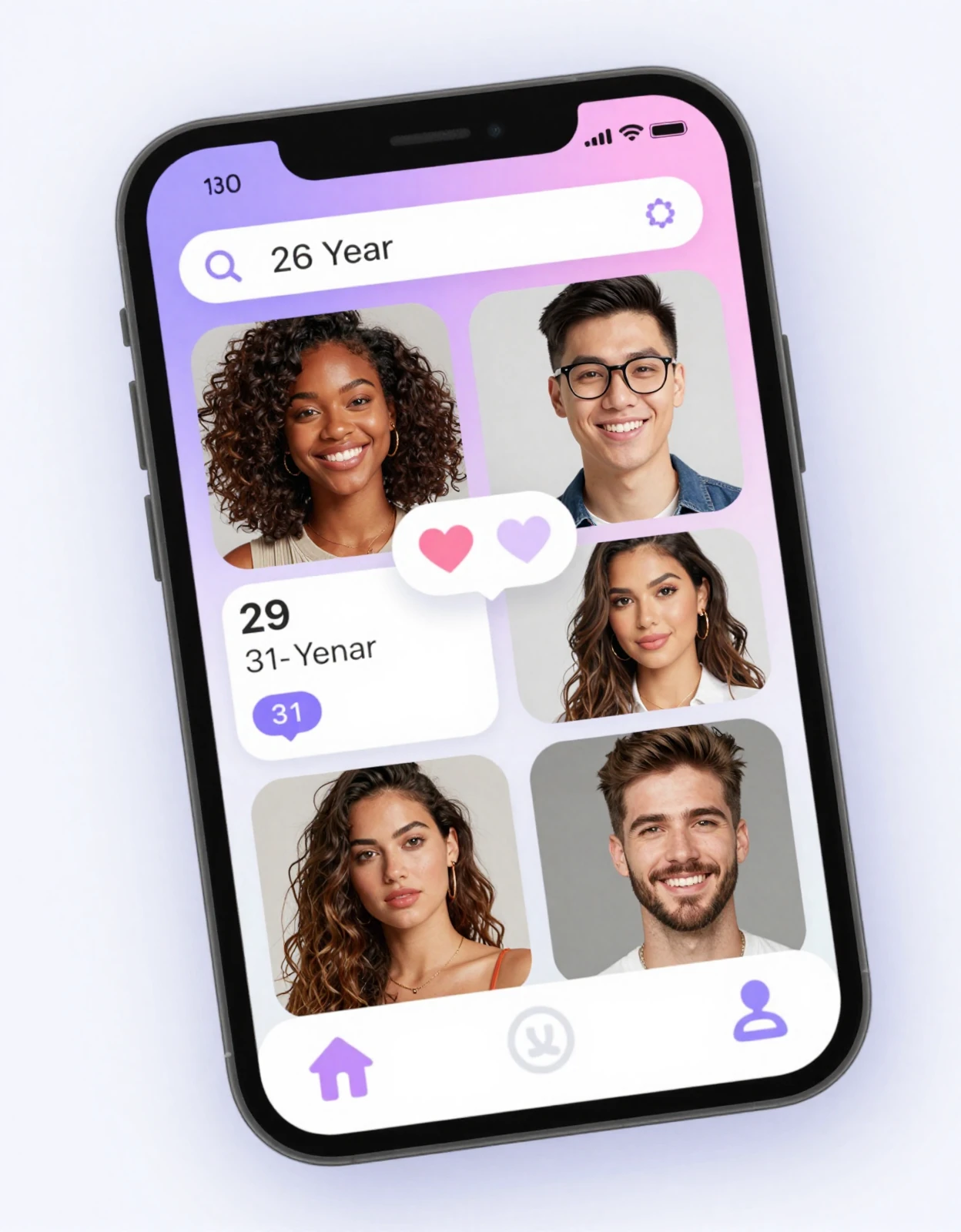
Modern dating app interface showing diverse profiles
AI-Powered Matching
Verified Profiles
Video Chat

How AI Algorithms Break Down Racial Barriers

Technology has fundamentally transformed interracial dating by removing geographic constraints and conscious biases. In 2025, 78% of singles actively use dating apps, with 42% of all matches crossing racial boundaries-a rate far higher than traditional in-person dating contexts. This technological mediation creates opportunities for compatibility-based connections that physical proximity alone could never achieve.

AI-matching algorithms represent the most significant innovation, recommending 51% interracial pairings with 37% relationship success rates. These systems prioritize deep compatibility factors-shared values, lifestyle preferences, communication styles, and long-term goals-over appearance-based selection. When algorithms control matching rather than user swiping, racial preferences diminish and successful cross-cultural connections increase dramatically.

Hinge leads the industry with 47% interracial matches and 31% relationship success, focusing on detailed profiles that showcase personality and interests. Bumble empowers women to make first moves, resulting in 45% interracial matches with 26% success. Even appearance-focused Tinder shows 38% interracial matches, though with lower 18% success rates, suggesting that depth of profile information correlates with relationship longevity.

The Social Media Effect on Interracial Dating

Social media platforms facilitate 52% of interracial couple connections in 2025, with 89% of couples actively using these networks to maintain and deepen relationships. Instagram, Facebook, and TikTok expose users to diverse representations of interracial relationships, normalizing cross-cultural romance for younger generations. Among Generation Z users, 85% report being influenced by online diversity, creating positive feedback loops where visibility breeds acceptance.

Video dating platforms show particularly high interracial interaction rates at 49% with 34% relationship success. The ability to see and hear potential partners before meeting reduces anxiety about cultural differences while building genuine connection. Video calls eliminate geographic barriers while providing richer communication than text-based messaging, creating intermediate steps between online matching and in-person dates.

Why Platform Design Matters for Cross-Cultural Connections

Dating platform architecture significantly impacts interracial matching success. eHarmony demonstrates this principle: despite showing lower initial interracial connection rates of 35%, the service achieves the highest relationship success at 42%. This pattern suggests that deep compatibility matching based on psychological assessments produces more stable long-term relationships than appearance-based rapid swiping.

Platforms emphasizing detailed profiles, shared interests, and compatibility scoring consistently outperform those focused primarily on photos. Features promoting meaningful conversation-icebreaker questions, prompt responses, voice messages-help users connect on personality and values rather than physical appearance or racial categories. This design philosophy breaks down barriers by foregrounding what matters most for relationship success.

51%
AI Interracial Recommendations
52%
Social Media Couple Connections
49%
Video Dating Interracial Rate
89%
Couples Using Social Networks

Who's Finding Love: The Demographics of Modern Interracial Dating

Tech-savvy professionals aged 25-40 are leading the interracial dating revolution. Here's who's finding success and why.

Age & Generation Breakdown

🎯

Generation Z

Ages 18-27
32%

The most diverse generation in history, with 85% influenced by social media diversity and 45% considering race unimportant in partner selection.

  • 92% are social media users
  • 89% meet partners through apps
  • 78% college interracial dating rate
💼

Millennials

Ages 28-43
24%

Career-building professionals with 67% using dating apps, preferring education-matched partners and compatibility over racial similarity.

  • 67% utilize dating apps
  • Focus on professional compatibility
  • Median income $70K-$150K
🏠

Generation X

Ages 44-59
18%

Established professionals with 43% reporting online influence, representing significant progress from previous generations.

  • 43% online dating influence
  • Stable career positions
  • Growing acceptance rates

Professional Field Leaders

Technology

34%
workplace formation
$142K SF Bay income 6.2 years avg duration 8.7/10 diversity score

Government

37%
workplace formation
$118K DC income 7.1 years avg duration 8.9/10 diversity score

Healthcare

29%
workplace formation
5.8 years avg duration 8.3/10 diversity score

Education

31%
workplace formation
6.7 years longest duration High degree holders

The Tech-Savvy Professional Profile

Modern interracial daters are predominantly educated professionals aged 25-40 in the career-building phase of life. With 68% holding college degrees (compared to 52% for same-race couples), this demographic demonstrates how education correlates with cultural openness. They earn between $70,000-$150,000 annually, with median household incomes of $87,600-significantly higher than the $79,200 average for same-race couples.

These urban dwellers congregate in diverse metropolitan areas where professional opportunities and cultural variety intersect. They work in merit-based industries-technology, government, healthcare, education, and finance-where workplace diversity scores above 8/10 create natural environments for cross-cultural connection. Their professional networks span racial boundaries, normalizing interracial relationships through daily exposure.

How Pain Points Shape Dating Behavior

Traditional dating pools represent the primary challenge, limiting interracial connections through geographic and social homogeneity. Technology solves this by expanding reach beyond immediate social circles. Family disapproval concerns persist, though at declining rates as 94% public approval creates supportive environments. Cultural and religious barriers appear in only 14% of evangelical households versus 47% of interfaith households, showing how values alignment matters more than racial similarity.

Geographic limitations affect those in less diverse regions, where Southern states average just 16% interracial marriage rates compared to Western states at 28-67%. Dating app algorithms address this by connecting users across metro areas, though most successful relationships still form within major urban centers like San Francisco Bay Area (34%), Washington DC (35%), and Seattle (31%).

What Triggers Conversion to Interracial Dating

Statistical proof drives decision-making for this data-informed demographic. The 94% public approval rate, 19% marriage rate, and $8,400 income advantage provide rational justification for considering interracial partners. Generation Z normalization at 32% creates social proof, while workplace diversity exposure in technology (8.7/10) and government (8.9/10) makes cross-cultural relationships feel natural rather than exceptional.

Technology success stories resonate powerfully: Hinge's 47% interracial matches with 31% success rates, AI algorithms recommending 51% interracial pairings with 37% success, and social media facilitating 52% of connections. These metrics demonstrate that compatibility-based matching transcends racial preferences when given algorithmic assistance, producing relationships that last 6-7 years on average for educated professionals.

Your Ideal Match Profile

Age Range 25-40 years (Millennials & Gen Z)
Education 68% college-educated, advanced degrees preferred
Income $70K-$150K annually, $87,600 median household
Location Urban metros: SF, DC, Seattle, LA, NYC
Industry Tech, Government, Healthcare, Education, Finance
Values Diversity, merit-based judgment, cultural curiosity

Geographic Guide: Where Interracial Love Thrives

Location matters. Discover the metros and states where interracial couples find the most success, acceptance, and economic opportunity.

Top Metropolitan Areas for Interracial Dating

2

Washington DC Metro

35% Interracial Rate
$118,000 Median Income
+13% Growth Since 2020
Black-White Common Pairing

The capital's educated, internationally-minded government workforce brings together people from varied backgrounds with remarkable growth rates.

3

Seattle

31% Interracial Rate
$98,000 Median Income
Tech Hub Industry Leader

Progressive Pacific Northwest tech hub with strong Asian population and open-minded culture supporting diverse relationships.

4

Los Angeles

29% Interracial Rate
$86,000 Median Income
Diverse Mix All Pairings

America's most diverse large metro with entertainment industry and massive immigrant populations creating multicultural dating environment.

5

New York City

27% Interracial Rate
$94,000 Median Income
8M+ Singles Largest Pool

The nation's largest dating market with incredible diversity, though housing costs and geographic size create connection challenges.

State Leaders in Interracial Marriage

🌺

Hawaii

67%

No racial majority creates completely normalized multiracial environment

❄️

Alaska

33%

Small population, military presence, Native American integration

🎰

Nevada

31%

Las Vegas tourism, entertainment, and service industries drive diversity

🌵

New Mexico

29%

Historic Native American and Hispanic populations blend with newcomers

☀️

California

28%

Nation's most diverse state with progressive attitudes and tech economy

Why Western States Lead in Interracial Marriage

Geographic patterns reveal stark regional differences in interracial marriage rates. Western United States consistently demonstrates the highest rates, with Hawaii leading at 67% of all marriages crossing racial lines-a rate so high that interracial relationships represent the norm rather than exception. This reflects Hawaii's unique demographics where no single racial group holds majority status, creating a genuinely multicultural society where racial boundaries hold minimal social significance.

Mainland Western states follow Hawaii's lead: Alaska (33%), Nevada (31%), New Mexico (29%), and California (28%) all exceed the national 19% average. These states benefit from diverse demographics resulting from immigration patterns, Native American populations, military installations, and progressive social attitudes. The tech industry concentration in California and Washington creates merit-based workplaces attracting international talent, further normalizing cross-cultural relationships.

Southern states average just 16% interracial marriage rates, though this represents remarkable progress from near-zero rates during the segregation era. Urban Southern metros like Atlanta (24%), Miami (26%), and Houston (22%) show higher rates than regional averages, demonstrating how urbanization and economic opportunity drive social change even in traditionally conservative regions.

Metropolitan Economic Opportunities Drive Relationship Formation

The correlation between economic opportunity and interracial marriage rates is striking. San Francisco Bay Area combines the highest interracial rate (34%) with the highest median income ($142,000), reflecting how tech industry compensation attracts diverse, educated talent from around the world. The region's merit-based hiring practices and international workforce composition create workplaces where 34% of couples meet through professional connections.

Washington DC Metro ranks second nationally at 35% with $118,000 median income, showing remarkable +13% growth since 2020. The capital region's concentration of government jobs (8.9/10 diversity score), international organizations, universities, and think tanks attracts educated professionals from every background. The government sector shows 37% of couples meeting at work with the longest average relationship duration of 7.1 years.

Seattle (31%, $98,000), Los Angeles (29%, $86,000), and New York (27%, $94,000) round out the top five, each offering distinct advantages. Seattle combines tech industry opportunities with Pacific Northwest progressive culture. Los Angeles provides entertainment industry diversity and massive immigrant populations. New York offers the nation's largest dating pool with 8 million+ singles, though geographic sprawl and housing costs create challenges for relationship formation.

Migration Patterns and Future Growth Areas

Internal migration patterns reveal where interracial couples are moving for optimal opportunities. The San Francisco Bay Area shows +8% growth since 2020 despite high housing costs, indicating that tech industry compensation ($142,000 median) justifies the expense. Washington DC's dramatic +13% growth reflects government sector expansion and political importance attracting diverse talent.

Emerging Southern metros show accelerating growth as they attract educated workers from coastal states. Austin, Charlotte, Nashville, and Raleigh-Durham combine lower costs of living with growing tech sectors, creating new opportunities for diverse relationship formation. These cities may represent the future of American interracial dating as economic opportunity shifts from expensive coastal markets to more affordable interior metros.

Regional Comparison

Western States
28% average
National Average
19%
Southern States
16% average

Building Lasting Love: Success Factors for Interracial Relationships

Navigate challenges and leverage advantages to create strong, enduring interracial partnerships.

Common Challenges

Family Disapproval Concerns

Despite 94% public approval, some families maintain traditional preferences, creating anxiety about acceptance and cultural integration.

Cultural & Religious Barriers

Denominational differences and traditional values create navigation challenges, though interfaith households show 47% interracial rates.

Geographic Limitations

Southern states average just 16% rates versus Western states at 28%, limiting opportunities in less diverse regions.

Traditional Dating Pool Limits

Homogeneous social circles restrict interracial connections through geographic and cultural segregation patterns.

Success Strategies

Higher Education Correlation

Advanced degree holders show 35% interracial rates with $127K incomes. Education opens minds and expands social networks.

Professional school: 42% rate

Economic Stability

$87,600 median vs $79,200 same-race. Financial security reduces external pressures and enables couple focus.

73% homeownership vs 69%

Workplace Diversity Exposure

Government (8.9/10 diversity, 37% formation) and tech (8.7/10, 34% formation) create natural interracial connections.

Longest duration: 7.1 years

Compatibility-Based Matching

eHarmony achieves 42% success despite 35% initial rate. Deep compatibility trumps appearance-based selection.

AI algorithms: 51% interracial

Interfaith Tolerance

Interfaith households lead at 47% rate. Openness to multiple boundaries creates strongest foundations.

Secular: 31% vs Evangelical: 14%

How Education Creates Cultural Openness

Education emerges as the single strongest predictor of interracial relationship success, creating a clear gradient from 11% for those with less than high school education to 42% for professional school graduates. This correlation operates through multiple mechanisms: higher education exposes students to diverse peer groups during formative years, teaches critical thinking that challenges inherited prejudices, and opens doors to merit-based professional environments where racial integration occurs naturally.

College campuses show remarkable 78% interracial dating rates, with students forming relationships based on shared interests, academic pursuits, and social activities rather than racial categories. International students demonstrate the highest rates at 67%, serving as cultural bridges who bring inherent openness to diversity. The college experience normalizes cross-cultural friendships and romantic relationships that persist into professional life.

Advanced degree holders maintain 35% interracial marriage rates with $127,000 median incomes, while bachelor's degree holders show 28% rates at $89,000 incomes. The economic premium associated with education reduces financial stress that can strain relationships, while also correlating with residence in diverse urban metros offering optimal dating opportunities. Professional school graduates (42% rate, $156,000 income) represent the pinnacle of this educational advantage.

The Economic Foundation of Relationship Stability

Economic advantages provide crucial stability for interracial couples navigating potential family or social challenges. The $8,400 median income premium ($87,600 vs $79,200) reflects both higher education levels and dual-career household patterns (81% vs 74%). This financial cushion creates options-couples can choose where to live based on cultural fit rather than pure economics, invest in relationship-building experiences like travel, and weather external pressures without economic stress compounding cultural challenges.

Home ownership rates of 73% versus 69% provide stability and community integration, while retirement savings averaging $24,000 higher demonstrate long-term planning orientation. Investment portfolios showing $22,000 premiums and credit scores 27 points higher (748 vs 721) indicate financial sophistication and responsibility. These economic factors don't cause relationship success directly, but they remove barriers and create environments where love can flourish without financial anxiety.

Why Workplace Diversity Matters Most

Workplace diversity emerges as perhaps the most critical factor in interracial relationship formation, creating daily exposure that normalizes cross-cultural interaction. Government employment leads with 8.9/10 diversity scores, resulting in 37% of couples meeting at work with the longest average relationship duration of 7.1 years. The stable, mission-driven environment attracts educated professionals committed to public service, creating values alignment that transcends racial differences.

Technology sector follows at 8.7/10 diversity with 34% workplace couple formation and 6.2 year durations. Merit-based hiring in competitive tech fields prioritizes skills over demographics, while international workforce composition brings together people from every background. Education shows 31% workplace formation with impressive 6.7 year durations, reflecting academic environments' emphasis on intellectual compatibility. Healthcare at 8.3/10 diversity shows 29% formation, while manufacturing's lower 6.2/10 diversity correlates with just 18% formation and shortest 4.3 year durations.

Navigating Religious and Cultural Differences

Religious affiliation significantly impacts interracial marriage patterns, with interfaith households showing the highest rates at 47%. These couples demonstrate exceptional openness to crossing multiple boundaries simultaneously-racial, religious, and cultural-reflecting deep tolerance and willingness to compromise. Hindu/Buddhist communities (35%), secular individuals (31%), and Jewish communities (28%) show high rates, while evangelical Protestants maintain 14% representing significant progress but continuing traditional constraints.

Successful interracial couples often share common approaches to religious differences: focusing on shared values rather than specific doctrines, respecting each other's traditions while creating new family customs, and prioritizing relationship strength over external expectations. Interfaith tolerance correlates with other openness markers-higher education, urban residence, workplace diversity exposure-suggesting a comprehensive worldview rather than isolated preferences.

Key Success Indicators

68% College Educated
$87,600 Median Income
6-7 years Avg Duration
8.7/10 Workplace Diversity

Economic Advantages: The Financial Benefits of Interracial Partnerships

Data reveals compelling financial advantages for interracial couples across income, savings, homeownership, and long-term wealth building.

Home Ownership Rate

Property ownership percentage

73% Interracial
69% Same-Race
+4% higher ownership

College Education Rate

Bachelor's degree or higher

Interracial
68%
Same-Race
52%
+16% higher education

Dual-Career Households

Both partners working professionally

Interracial
81%
Same-Race
74%
+7% more dual-income

Retirement Savings

Average retirement account balance

Interracial
$142K
Same-Race
$118K
+$24K more retirement

Investment Portfolios

Non-retirement investment accounts

Interracial
$89K
Same-Race
$67K
+$22K larger portfolios

Credit Scores

Average credit rating

748
Interracial
Excellent
721
Same-Race
Good
+27 points higher credit

Why Economic Advantages Exist

The economic premium associated with interracial relationships reflects multiple interconnected factors rather than a single cause. Education emerges as the primary driver: interracial couples show 68% college education rates compared to 52% for same-race couples, a remarkable 16-percentage-point gap. This educational advantage translates directly into higher earning potential, with professional school graduates earning median incomes of $156,000 and STEM workers at $98,000.

Geographic concentration in high-income metros amplifies the economic effect. San Francisco Bay Area interracial couples average $142,000 median incomes, Washington DC shows $118,000, and Seattle $98,000. These regions offer premium compensation while also featuring diverse populations that make interracial relationships more common. The causality flows both directions: high-earning metros attract educated diverse workers, while educated workers choose these metros for career opportunities.

Dual-career household patterns (81% vs 74%) contribute substantially to the income premium. Interracial couples more frequently consist of two professionals with complementary career trajectories, often meeting through workplace diversity in high-paying industries like technology (8.7/10 diversity, $142K SF Bay incomes), government (8.9/10 diversity, $118K DC incomes), and finance. The dual-income advantage compounds over time through combined retirement savings and investment capacity.

Long-Term Wealth Building Patterns

The $8,400 annual income premium compounds dramatically over relationship lifetimes through multiple wealth-building channels. Home ownership at 73% versus 69% provides both housing stability and equity accumulation, with property appreciation particularly strong in the diverse urban metros where interracial couples concentrate. The 4-percentage-point ownership gap represents tens of thousands of households building wealth through real estate.

Retirement savings show even more dramatic differences: $142,000 versus $118,000 represents a $24,000 gap that will compound through investment returns over decades. Assuming 7% annual returns, this $24,000 gap grows to approximately $95,000 over 20 years. Investment portfolios averaging $22,000 higher ($89,000 vs $67,000) similarly compound, creating substantial wealth differences by retirement age.

Credit scores of 748 versus 721 reflect both higher incomes and more sophisticated financial management. The 27-point advantage translates into better mortgage rates (typically 0.25-0.5% lower), credit card terms, insurance premiums, and employment opportunities. Over a 30-year mortgage, this rate advantage saves approximately $50,000-$100,000 in interest payments alone.

Professional Field Income Variations

Professional field patterns reveal how workplace diversity correlates with both interracial relationship formation and economic success. Technology sector workers in the San Francisco Bay Area earn median incomes of $142,000-the highest nationally-while also showing 34% workplace couple formation rates. The tech industry's merit-based hiring, international workforce, and premium compensation create optimal conditions for successful interracial partnerships.

Government employees in Washington DC earn $118,000 median incomes while showing the highest workplace formation rate at 37% and longest relationship duration at 7.1 years. Government sector stability, comprehensive benefits, and mission-driven culture attract educated professionals who prioritize service over maximum compensation. The stable employment environment provides ideal foundations for long-term relationship building and wealth accumulation.

Healthcare and education sectors show strong patterns despite slightly lower compensation. Healthcare workers average 29% workplace formation, while education shows 31% formation with the longest 6.7 year durations outside government. Both fields require advanced degrees, creating self-selected populations with cultural openness and professional dedication that support successful interracial relationships.

The Financial Case for Interracial Dating

Beyond love and compatibility, interracial couples demonstrate consistent financial advantages that create stability and opportunity. These economic benefits don't cause relationship success, but they remove barriers and create environments where partnerships can thrive without financial stress adding to cultural navigation challenges.

$8,400 Higher Annual Income
$46K Additional Savings & Investments
73% Homeownership Rate
748 Average Credit Score
Diverse couples celebrating love together

Start Your Interracial Dating Journey Today

Join 11 million couples who found lasting love across cultural boundaries. Your perfect match is waiting.

1

Join 11 Million Couples

Create your free profile and join the largest community of interracial singles finding authentic connections.

2

Complete Compatibility Profile

Share your values, interests, and relationship goals. Our detailed profiles go beyond superficial swiping.

3

Get AI-Powered Matches

Receive intelligent recommendations based on deep compatibility factors, not just appearance preferences.

4

Connect Across Cultures

Start meaningful conversations with verified profiles who share your values and vision for the future.

94% Public Approval
19% of All New Marriages
Generation Z Leading at 32%
78% Singles Using Apps
$87,600 Median Income
2,847 Singles Joined Today 🎁 Limited Free Premium Access

Your Perfect Match Awaits

The interracial dating landscape has never been more promising. With 19% of new marriages crossing racial lines and projected growth to 25-30% by 2030, you're joining a mainstream movement rather than a niche community. Technology has removed geographic barriers that once limited connections, while 94% public approval creates supportive environments free from the stigma of previous generations.

Generation Z's unprecedented 32% interracial dating rate demonstrates how quickly social norms are evolving. If you're among the 78% of singles using dating apps, you've already taken the first step. Now it's time to choose a platform that actively facilitates cross-cultural connections through AI-powered matching algorithms recommending 51% interracial pairings with 37% success rates.

The economic advantages-$8,400 higher median incomes, 73% homeownership, $142,000 retirement savings-reflect the correlation between education, cultural openness, and professional success. You're not just finding love; you're joining a community of educated professionals building prosperous futures together. With average relationship durations of 6-7 years for college-educated couples, the data supports optimism about long-term success.

Don't let limited traditional dating pools hold you back. Geographic barriers dissolve when you connect with compatible partners across your metro area or even across state lines. Whether you're in San Francisco Bay Area (34% rate), Washington DC (35%), or any diverse urban center, your compatible match exists-they're just waiting for you to take the first step.

Multiracial individuals already show 87% interracial partnership rates, previewing the normalized future where racial boundaries matter less than authentic compatibility. This isn't about ignoring cultural differences; it's about recognizing that shared values, educational backgrounds, and life goals create stronger foundations than racial similarity alone. Start your journey today and discover why millions are finding their perfect match across all cultures.